Investment
Commercial Real Estate Investment Fundamentals
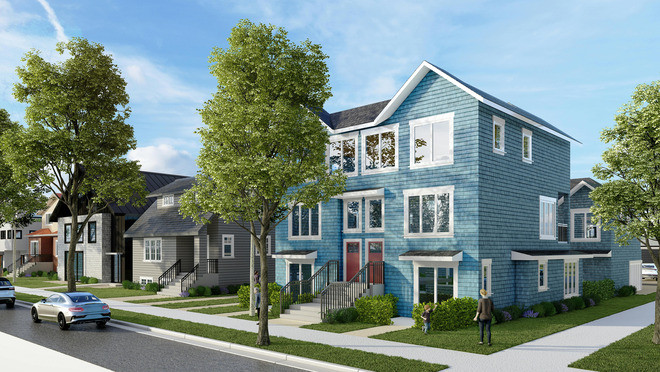
Master commercial real estate fundamentals—from NOI valuation and lease structures to DSCR financing and due diligence—so your first acquisition is built on disciplined numbers, not optimism.
On This Page
Commercial real estate (CRE) builds long-term wealth through durable cash flow and forced appreciation, not market speculation. Unlike residential real estate, where emotion and neighborhood comps dictate price, CRE is an operating business wrapped in bricks and mortar.
Before committing capital to your first acquisition, master the mechanics that separate disciplined investors from over-leveraged buyers: valuing properties on net operating income rather than comparable sales, and knowing what to look for in leases, financing, and due diligence. Learn the metrics lenders use, the costs that quietly erode returns, and the safeguards that protect your downside, so your first acquisition is built on numbers, not optimism.
1. Asset Classes: Matching Risk to Strategy
CRE encompasses any income-producing property leased for business or multi-unit residential use. Each asset class carries distinct operational demands:
Industrial: Warehouses, logistics hubs, and flex spaces. Typically lower tenant turnover and minimal landlord maintenance, especially in high-demand distribution corridors.
Multifamily: Residential buildings with five or more units. Resilient demand and staggered lease expirations, though management is more intensive.
Retail: Strip plazas, neighborhood centers, and single-tenant net-lease pads. Performance hinges on location visibility, parking ratios, and tenant mix.
Office: Suburban low-rises to urban towers. The market is split: well-located, modern medical or professional suites outperform older, capital-intensive Class B/C stock.
Specialty: Cold storage, self-storage, and hospitality. High barriers to entry and specialized build-outs can yield strong returns, provided you understand the underlying operations.
2. Valuation: Buying the Income Stream
Residential properties trade on comparable sales. Commercial properties trade on Net Operating Income (NOI): the cash left after collecting rent and paying operating expenses, before debt service and income taxes.
Three metrics anchor every underwriting model:
Capitalization Rate (Cap Rate): $\text{NOI} \div \text{Purchase Price}$. A property generating $150,000 in NOI and priced at $2,000,000 trades at a 7.5% cap rate. If better management or rent adjustments add $30,000 in NOI at that same cap rate, you create $400,000 in property value ($\$30,000 \div 0.075$).
Cash-on-Cash Return: $\text{Annual Pre-Tax Cash Flow} \div \text{Total Cash Invested}$. This measures how hard your actual equity is working after paying the mortgage.
Below-the-Line Costs: Never stop at NOI. True cash flow accounts for capital expenditures (roofs, HVAC, paving), tenant improvements (TIs), and leasing commissions (LCs) required to keep spaces occupied.
3. Leases: The Real Asset You Are Buying
When you buy a commercial building, you are buying its rent roll. Commercial leases typically run 3 to 10+ years and dictate who pays for the building's upkeep:
Gross Lease: You collect one all-in rent and absorb property taxes, insurance, and maintenance. If taxes or snow-removal costs spike, your NOI shrinks.
Triple Net (NNN) Lease: The tenant pays base rent plus their proportionate share of property taxes, building insurance, and common area maintenance (CAM). This shields your cash flow from expense inflation.
What to Scrutinize: Look beyond current rent. Check the Weighted Average Lease Term (WALT), annual rent escalations (such as 2% to 3% yearly bumps or CPI adjustments), and tenant creditworthiness. A building that is 100% occupied but has three major leases expiring in eight months is a vacancy problem waiting to happen.
4. Financing and Debt Discipline
Commercial lenders underwrite the property first and the borrower second. Expect 25% to 35% down payments, shorter loan terms (often 5-year fixed) amortized over 20 to 25 years, and strict covenant monitoring.
Debt Service Coverage Ratio (DSCR): Lenders rely on $\text{NOI} \div \text{Annual Debt Service}$. Most require a minimum of 1.20x to 1.35x, meaning the property must generate 20% to 35% more net income than needed to cover the mortgage.
Refinancing Stress-Test: Always model refinancing risk. Make sure the property still cash-flows if interest rates are 150 basis points higher when your term renews.
5. Non-Negotiable Due Diligence
Never rely on a seller's pro forma. Verify the numbers during your conditional period:
Financial Audit: Cross-check the rent roll against signed leases, bank deposits, and two years of utility and tax bills.
Physical and Environmental: Order a Property Condition Assessment (PCA) to forecast five years of CapEx, plus a Phase I Environmental Site Assessment (ESA). The ESA is essential for industrial or former automotive and dry-cleaning sites to avoid inheriting soil contamination liability.
Zoning and Title: Confirm permitted uses match current and future tenant plans, and check for easements or right-of-way restrictions.
6. Managing Downside Risk
Experienced investors protect the downside before chasing upside:
Concentration Risk: Avoid relying on a single tenant for 80% of your revenue unless they carry investment-grade credit on a long-term NNN lease.
Reserve Accounts: Fund a dedicated CapEx reserve from day one, so a $60,000 roof replacement doesn't wipe out two years of cash flow.
Liquidity: Commercial transactions take months, not weeks, to close. Keep adequate working capital on hand.
Getting Started
Direct ownership offers maximum control, tax advantages, and forced-appreciation upside. Investors seeking passive exposure can also evaluate private partnerships or publicly traded REITs.
Whichever route you choose, build your advisory team early: a specialized commercial broker, real estate attorney, tax accountant, and property manager. Then let disciplined underwriting, not optimism, drive every offer.
Disclaimer: This article is for informational purposes only and does not constitute financial, tax, or legal advice.
Sources and further reading
About the Author

Our Commercial Real Estate Services
-
Buy Commercial Real Estate
Find and acquire the right property in Greater Moncton and New Brunswick.
-
Sell Commercial Real Estate
Evaluate, position and market your property to the right buyers.
-
Lease Commercial Real Estate
Support for landlords and tenants, from space planning to lease terms.
-
Commercial Real Estate Investing
Build and grow your investment through data, analysis and strategy.
Let's talk commercial real estate.
Buying, selling, leasing or exploring an investment? Tell us what you're considering.